
Baby Movements During Pregnancy: What Is Normal?
One of the most magical milestones in pregnancy is feeling your baby move for the very first time. Those tiny flutters, kicks, and rolls are not just heartwarming they are important signs that your baby is growing and healthy. However, many expectant mothers often wonder: are these baby movements during pregnancy normal? Am I feeling enough movement? When should I be concerned? At Sri Sai Women & Children's Clinic in Gopanpally, Hyderabad, Dr. Vanisree Padige a highly experienced gynaecologist and obstetrician with 16 years of expertise guides expecting mothers through every stage of pregnancy, including understanding and monitoring fetal movements. If you are in Gopanpally, Nallagandla, Tellapur, or nearby areas of Hyderabad, this guide is for you.
What Are Baby Movements During Pregnancy?
Baby movements during pregnancy medically referred to as fetal movements are the kicks, rolls, punches, and somersaults your baby makes inside the womb. These movements begin early in pregnancy, though you may not feel them right away. As the baby grows, the movements become stronger and more recognizable.
Understanding what normal fetal movement feels like and how it changes throughout pregnancy is a key part of monitoring your baby's well-being. Dr. Vanisree Padige at Sri Sai Clinic, Gopanpally, emphasizes that tracking fetal movements is one of the simplest yet most effective ways a mother can stay connected to her baby's health.
When Does Baby Start Moving in the Womb?
Babies actually begin moving in the womb as early as 7–8 weeks of pregnancy long before the mother can feel anything. However, most first-time mothers feel fetal movements (called quickening) between 18 and 25 weeks of pregnancy. Women who have been pregnant before may notice movements earlier, around 16 weeks.
Trimester-by-Trimester Breakdown
-
First Trimester (Weeks 1–12):
The baby begins to move, but the movements are too small and faint to be felt. Most women do not feel anything yet during this stage.
-
Second Trimester (Weeks 13–26):
This is when most mothers first feel those early fluttery sensations, often described as butterflies or gas bubbles. By week 20–22, kicks and rolls become more noticeable. By week 24–26, partners can sometimes feel the movement from the outside.
-
Third Trimester (Weeks 27–40):
Baby movements during pregnancy are strongest and most regular in the third trimester. Around weeks 32–35, movements may feel different as the baby has less space to somersault but should remain frequent. Near the due date, the baby typically settles into a head-down position and movements may feel more like pushes and stretches than kicks.
What Is a Normal Pattern of Fetal Movement?
Every baby has its own unique pattern of movement, which is why knowing your baby's individual rhythm is more important than comparing to a fixed number. That said, there are general guidelines that help identify normal fetal movement.
Normal Signs of Baby Movement
- You feel at least 10 distinct movements in 2 hours (this is known as the kick count or fetal movement count).
- The baby tends to be more active after meals or when you lie down and rest.
- Movement patterns become more regular and predictable after 28 weeks.
- You notice a consistent daily pattern of active and quiet periods.
- Baby responds to sounds, light, or gentle pressure on your belly.
At Sri Sai Women & Children's Clinic in Gopanpally, Dr. Vanisree Padige advises all her patients in Gopanpally, Nallagandla, Serilingampally, and Tellapur to begin tracking movements daily from 28 weeks onwards. This simple habit can be life-saving.
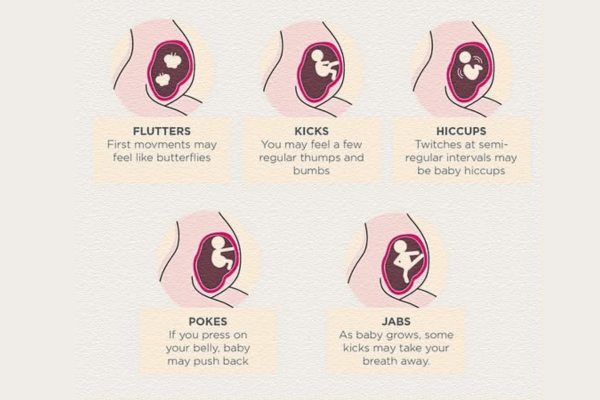
Types of Baby Movements You May Feel
Fetal movements come in many forms. Here is what you might experience:
- Kicks: The most common type of movement, often felt as distinct thumps or jolts.
- Rolls: A slow, sweeping sensation as the baby turns in the womb.
- Flutters: Light, butterfly-like sensations, common in early second trimester.
- Hiccups: Rhythmic, repetitive movements that feel like small, regular jolts — these are normal and a sign of a healthy nervous system.
- Stretches: Long, continuous pressure as baby extends arms or legs.
- Punches: Quick, jabbing sensations similar to kicks but usually felt from the limbs.
Factors That Affect Baby Movement Patterns
Several factors can influence how much or when you feel baby movements during pregnancy:
Factors That Increase Movement
- Eating a meal or snack blood sugar rise stimulates activity.
- Physical activity your movement often rocks the baby into wakefulness.
- Lying on your left side improves blood circulation to the baby.
- Exposure to sounds or music.
- Evening and nighttime hours many babies are more active when the mother rests.
Factors That May Reduce Movement Temporarily
- Baby's natural sleep cycles (usually 20–40 minutes at a time).
- Position of the placenta (anterior placenta can muffle movement).
- Stress, dehydration, or low blood sugar in the mother.
- Medications such as antihistamines or sedatives.
- Time of day many babies are quieter in the morning.
Warning Signs: When Baby Movements Are Concerning
While some variation in fetal movement is normal, certain signs should never be ignored. Reduced or absent fetal movement can sometimes signal fetal distress or other complications. If you notice any of the following, contact your doctor or visit Sri Sai Clinic in Gopanpally, Hyderabad immediately:
- You feel fewer than 10 movements in a 2-hour period after 28 weeks.
- Your baby has not moved at all for more than 12 hours.
- There is a sudden, noticeable decrease in movement compared to your baby's usual pattern.
- The movements have become very weak or gentle when they used to be strong.
- You notice a sharp spike in movement followed by complete stillness.
- Your baby stops moving after a period of very vigorous activity.
Important: Do not wait until the next day if you are concerned. Trust your instincts and seek medical attention promptly.
When to See a Doctor About Fetal Movements
Many mothers hesitate to contact their doctor for fear of overreacting. However, Dr. Vanisree Padige and her team at Sri Sai Women & Children's Clinic in Gopanpally always encourage patients to reach out whenever they have concerns no matter how minor they seem.
You should see your gynaecologist if:
- You have not felt your baby move by the end of your 24th week.
- Movement significantly decreases or stops at any stage after 20 weeks.
- You have a high-risk pregnancy (diabetes, hypertension, previous pregnancy loss).
- You experience pain, bleeding, or fluid leakage along with decreased movement.
- You simply feel that something is not right maternal instinct matters.
Dr. Vanisree Padige specializes in high-risk pregnancy and fetal medicine, making Sri Sai Women & Children's Clinic in Gopanpally one of the most trusted destinations for expectant mothers in Hyderabad and surrounding areas including Nallagandla, Tellapur, and Serilingampally.
How to Monitor Baby Movements at Home: The Kick Count Method
The kick count (or fetal movement count) is a simple technique recommended by obstetricians to monitor baby's well-being:
Step-by-Step Kick Count Guide
- Step 1 - Choose a time of day when your baby is usually most active (often after a meal).
- Step 2 - Sit or lie comfortably on your left side.
- Step 3 - Count every distinct movement kicks, rolls, punches, or flutters.
- Step 4 - Note the time when you start and stop counting.
- Step 5 - Your goal is to feel 10 distinct movements within 2 hours. Most healthy babies reach this within 30–60 minutes.
- Step 6 - Record your count in a notebook or a pregnancy app.
If you do not reach 10 movements in 2 hours, have a small snack, drink cold water, and try again. If you still do not feel adequate movement, contact your doctor right away.
Tips to Stay Connected to Your Baby's Movements
Here are practical tips recommended by Dr. Vanisree Padige to stay mindful of your baby's movements during pregnancy:
- Begin daily kick counts from 28 weeks of pregnancy.
- Eat regular, nutritious meals and stay well hydrated dehydration can reduce fetal activity.
- Avoid smoking or alcohol, which can dangerously suppress fetal movements.
- Keep routine prenatal appointments at Sri Sai Women & Children's Clinic, Gopanpally.
- Use a pregnancy journal or app to track daily patterns.
- Do not panic over one quiet hour look at the overall daily pattern.
- If you have a history of high-risk pregnancy, discuss a personalized monitoring plan with your doctor.
- Trust your instincts. If something feels different, seek care promptly.
Internal Links
- Comprehensive Maternity Care at Sri Sai Clinic
- About Dr. Vanisree Padige – Gynaecologist in Gopanpally
- Book an Appointment with Dr. Vanisree Padige
- Painful Periods Aren't Normal – Women's Health Blog
Conclusion
Baby movements during pregnancy are one of the most beautiful and reassuring parts of the journey to motherhood. From the first gentle flutters to the strong kicks of the third trimester, your baby's movements tell a story of growth, vitality, and connection. Understanding what is normal and when to seek help can make all the difference.
Dr. Vanisree Padige, a trusted gynaecologist and obstetrician at Sri Sai Women & Children's Clinic in Gopanpally, Hyderabad, is dedicated to guiding you through every stage of your pregnancy with compassion, expertise, and personalized care. With 16 years of experience in managing high-risk pregnancies and fetal medicine, Dr. Vanisree Padige ensures that both mother and baby receive the best possible care.
Whether you are in Gopanpally, Nallagandla, Tellapur, Serilingampally, or anywhere in Hyderabad, the doors of Sri Sai Women & Children's Clinic are always open for you. Do not hesitate to reach out at any point during your pregnancy your baby's health, and your peace of mind, are our top priority.
Ready for your next prenatal checkup? Book an appointment with Dr. Vanisree Padige at Sri Sai Women & Children's Clinic, Gopanpally today.
Call: +91 76750 24254