Complete Vaccination Schedule for Babies in India
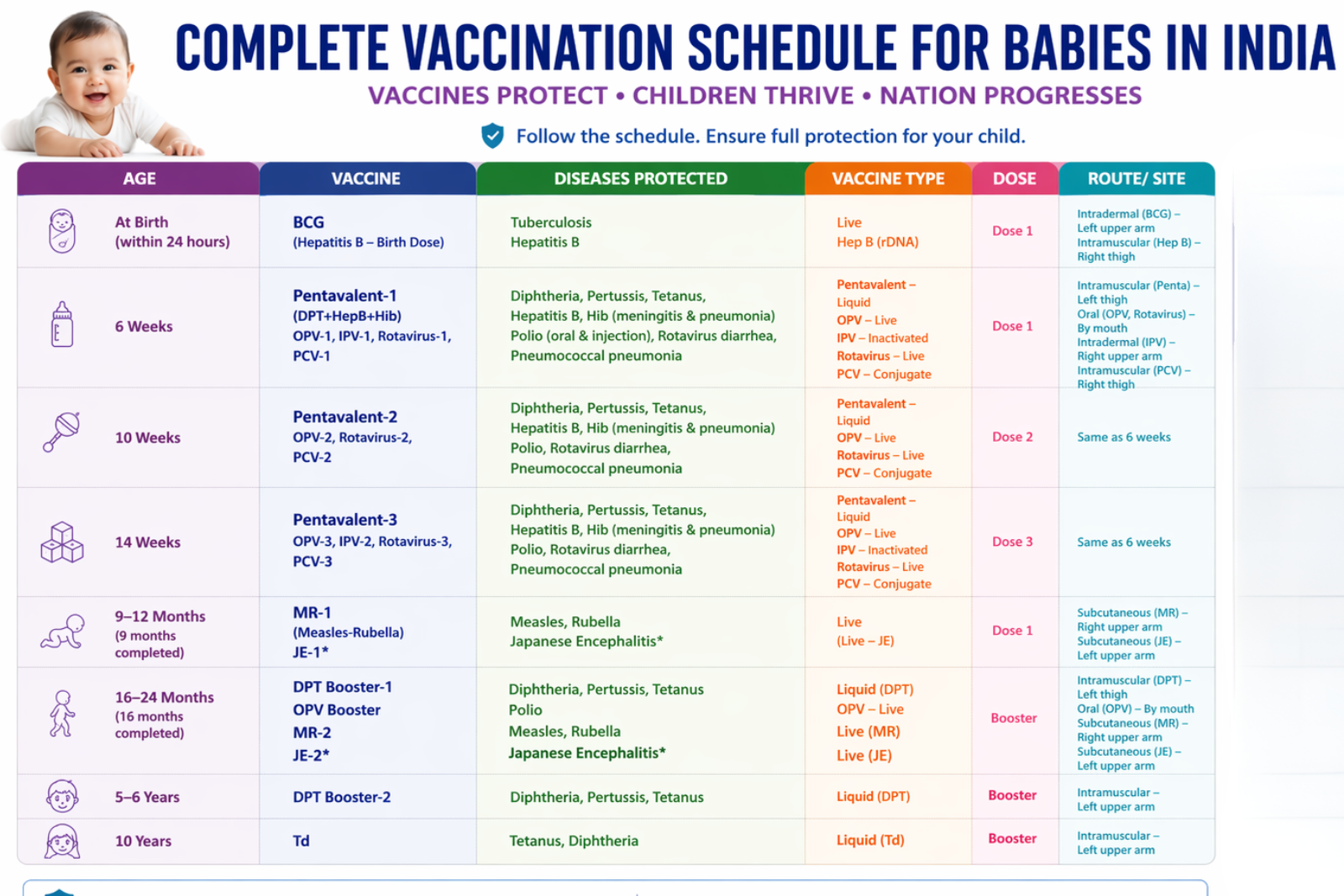
Vaccination is the single most effective and life-saving preventive healthcare intervention available for children. Vaccines have eradicated smallpox, brought polio to near-elimination in India, and dramatically reduced the incidence of diphtheria, pertussis, measles, and dozens of other diseases that once caused massive childhood mortality and morbidity. Yet despite the evidence, vaccine schedules remain confusing for many parents particularly when navigating between the government (NIS) schedule, the Indian Academy of Pediatrics (IAP) recommended schedule, and the growing list of optional vaccines not included in government programs. At Sri Sai Women & Children's Clinic in Gopanpally, Nallagandla, Dr. Satyanarayana BH — MBBS, DCH (Gold Medalist), MRCPCH provides complete, evidence-based vaccination guidance for every child in his care. This comprehensive guide to the vaccination schedule for babies in India is written to help every parent in Gopanpally, Tellapur, Serilingampally, and across Hyderabad ensure their child receives complete immunization.
Understanding India's Vaccination Framework
- NIS (National Immunization Schedule): The Government of India's Universal Immunization Programme free vaccines provided at government health centres. Covers the most critical vaccine-preventable diseases.
- IAP (Indian Academy of Pediatrics) Schedule: The expert paediatric body's recommended schedule includes additional vaccines not in the NIS that provide broader protection.
- Optional vaccines: Vaccines recommended by IAP but not yet universally government-funded available at private clinics including Sri Sai Clinic, Gopanpally.
Complete IAP-Recommended Vaccination Schedule
At Birth
- BCG - protection against tuberculosis; single dose at birth
- OPV 0 (Oral Polio Vaccine) first dose at birth
- Hepatitis B - first dose within 24 hours of birth
At 6 Weeks (1.5 Months)
- DTwP/DTaP - diphtheria, tetanus, pertussis (whooping cough)
- IPV - injectable polio vaccine
- Hib - Haemophilus influenzae type b; prevents meningitis and epiglottitis
- PCV 13 - Pneumococcal Conjugate Vaccine; prevents pneumonia and meningitis
- Rotavirus vaccine prevents severe rotavirus diarrhea (the most common cause of severe childhood gastroenteritis in India)
- Hepatitis B - second dose
At 10 Weeks (2.5 Months)
- DTwP/DTaP - second dose
- IPV - second dose
- Hib - second dose
- PCV 13 - second dose
- Rotavirus - second dose
At 14 Weeks (3.5 Months)
- DTwP/DTaP - third dose
- IPV - third dose
- Hib - third dose
- PCV 13 - third dose
- Rotavirus - third dose (if using 3-dose formulation)
At 6 Months
- Influenza vaccine - first dose (annual vaccination recommended thereafter; two doses in the first year)
- Hepatitis B - third dose
At 9 Months
- Measles-Mumps-Rubella (MMR) - first dose (or measles vaccine if MMR is used at 12 months)
- OPV - booster dose
At 12 Months (1 Year)
- Hepatitis A - first dose (optional under NIS, recommended by IAP)
- Varicella (chickenpox) - first dose
- PCV 13 - booster dose
At 15 Months
- MMR - second dose (or first dose if not given at 9 months)
- Varicella - second dose
- Hib - booster dose
At 18 Months
- DTwP/DTaP - booster (first booster)
- IPV - booster
- Hepatitis A - second dose
At 2 Years (24 Months)
- Typhoid conjugate vaccine - recommended by IAP for all children in India
- Annual influenza - yearly
At 4–6 Years
- DTwP/DTaP - second booster
- OPV - booster
- MMR - if not received earlier
- Varicella - if not received
At 10–12 Years
- Tdap - tetanus, reduced diphtheria, pertussis booster
- HPV vaccine - 2 doses for girls (and boys where affordable); protects against cervical cancer and genital warts
- Typhoid - booster
- Meningococcal vaccine for high-risk individuals and travellers
Optional but Highly Recommended Vaccines at Sri Sai Clinic Gopanpally
- PCV (Pneumococcal): Prevents the most common cause of bacterial pneumonia, meningitis, and ear infections strongly recommended.
- Rotavirus: Prevents severe diarrhea requiring hospitalization particularly valuable in India where rotavirus is endemic.
- Varicella (chickenpox): Prevents chickenpox and the rare but serious complication of chickenpox encephalitis.
- Hepatitis A: Prevents hepatitis A, particularly relevant in areas with variable water quality.
- Influenza: Annual flu vaccine from 6 months reduces illness burden, school absenteeism, and antibiotic overuse.
- Meningococcal: Recommended for travel to endemic areas and college-going adolescents.
Common Vaccine Questions Answered by Dr. Satyanarayana
Is mild fever after vaccination normal?
Yes — low-grade fever (38–38.5°C) for 1–2 days after DTP vaccines is a normal immune response. Paracetamol can be given for comfort. Fever above 39°C after vaccination, or fever persisting beyond 48 hours, should be evaluated.
Can vaccines be given when the baby has a mild cold?
Yes — mild upper respiratory infection with no fever is not a contraindication to vaccination. Vaccines should only be delayed for significant acute illness with high fever. Dr. Satyanarayana advises on individual cases.
Internal Links
- Vaccination Services at Sri Sai Clinic Gopanpally Nallagandla
- Newborn Care and Vaccination — Dr. Satyanarayana Gopanpally
- Paediatric OPD for Immunization — Sri Sai Clinic Gopanpally
- Book Vaccination Appointment Sri Sai Clinic Gopanpally
Conclusion
Vaccination is the most powerful gift you can give your child's health and completing the full vaccination schedule, including the optional vaccines recommended by the Indian Academy of Pediatrics, provides the broadest protection against vaccine-preventable diseases. At Sri Sai Women & Children's Clinic in Gopanpally, Nallagandla, Dr. Satyanarayana BH provides complete vaccination services for children from birth to 18 years, maintains detailed vaccination records, and advises parents on the full IAP schedule including optional vaccines. Do not miss a dose every vaccine given on time is a serious illness prevented.
Schedule your child's vaccination at Sri Sai Clinic, Gopanpally, Nallagandla. Call: +91-9347761835